Flat, but done well.
Every other ceiling type starts from a flat drywall ceiling. Drywall is gypsum board, which is why the same shaped ceilings are called gypsum ceilings in much of the world. A flat ceiling is not a lack of design: a smooth, well-lit flat ceiling in a low room often looks better than any added shape.
If the ceiling is textured, uneven or stained, sorting that out is the first decorative decision. Our guide to ceiling finishes covers smooth versus textured surfaces and what lighting does to each.
Tray ceilings.
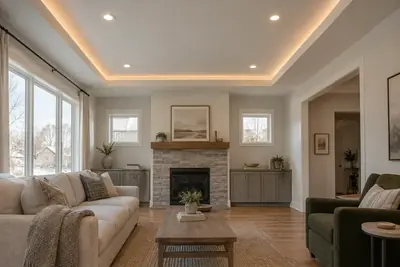
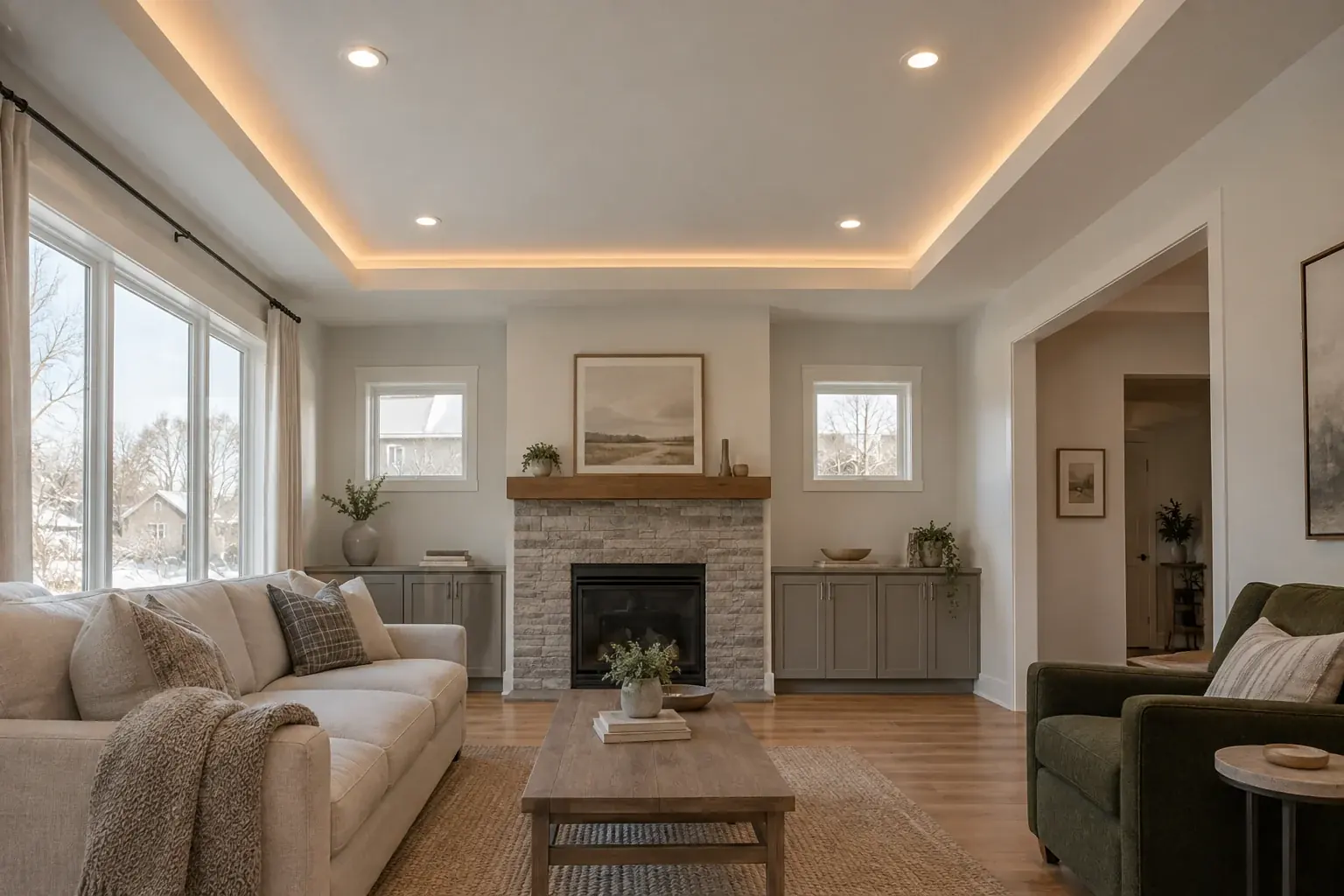
A tray ceiling has one central area that sits higher than a border around it. In an existing house the border is usually added below the old ceiling, so the centre keeps its height and the edge steps down. It is the most common decorative ceiling type in living rooms, dining rooms and primary bedrooms because one rectangle is easy to proportion and easy to light.
Read about tray ceiling installation for the practical questions, or compare it with a coffered grid in tray or coffered.
Coffered ceilings.
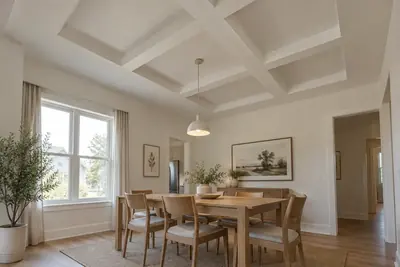
A coffered ceiling is a grid of beams with recessed panels between them. It repeats a pattern across the whole ceiling instead of framing one centre, which gives it more visual weight and needs more height. In a normal-height room a shallow grid, or a single tray instead, usually gives a better result.
The coffered ceiling guide goes through the height, layout and lighting decisions.
Cove-lit ceilings.
Cove lighting is a strip of light hidden behind a lip at the edge of the ceiling, so the ceiling glows and the source stays out of sight. It can sit inside a tray border or run around a flat ceiling on its own. Of all the types here it changes the evening feel of a room the most for the least construction.
See LED cove lighting for how it is built, and cove lighting or recessed lights for when you want both.
Recessed linear lighting.
Thin lines of light set flush into a flat ceiling, sometimes called trimless or plaster-in. The ceiling stays flat and the light supplies the pattern, which makes it the most contemporary-looking of the drywall types and the one that most depends on a good finish around the channel.
Start with recessed linear LED lighting or the explainer on those thin lines in the ceiling.
Vaulted, cathedral and beamed ceilings.
Vaulted and cathedral ceilings follow the roof line rather than the floor. They are a framing and insulation decision made when the house is built or during a major remodel, not a decorative layer added later. Exposed beams and wood ceiling designs, whether structural or applied, belong to carpentry; they can be beautiful and they are a different trade from drywall and lighting.
If your house already has a vaulted room, lighting is usually the useful conversation: a cove along the low walls or a line of light along the ridge can do a lot without touching the structure.
Tiles, planks and other ceiling coverings.
Ceiling coverings and ceiling treatments are broad terms that also include tongue-and-groove planks, tin or pressed panels, acoustic tiles and suspended grid ceilings. Suspended ceilings are practical in basements where pipes need access. Most coverings are installed by carpenters or ceiling-tile specialists rather than as part of a decorative drywall project.
Popcorn and other sprayed textures are also a covering of sorts; removing or smoothing them is usually the first step before any of the shaped types above.
How to choose.
Start with the ceiling height and the room’s use, then pick one type. The rooms that look considered rarely combine three of these; they commit to one and light it well.
- Under about nine feet: a flat ceiling with cove or linear light, or a shallow tray border
- Nine feet and above: a tray, a shallow coffered grid, or a deeper single border
- Rooms used mostly in the evening, such as living rooms and bedrooms: put the budget into indirect light
- Kitchens and work rooms: task light first, one detail over the island or table second
- Any room: decide what happens to the fan, the vents and the existing fixtures before choosing a shape
A few more questions.
What is the difference between a tray and a coffered ceiling?
A tray frames one raised centre with a single border. A coffered ceiling repeats a grid of beams and panels across the ceiling. The tray needs less height and less finishing; the coffer has more presence and more edges.
Is a gypsum ceiling the same as drywall?
Yes. Gypsum board, plasterboard and drywall are the same family of products. “Gypsum ceiling” and “POP ceiling” are common terms abroad for the shaped ceilings this guide calls tray, cove and coffered.
Which ceiling type adds the most value?
There is no reliable rule. The type that suits the room’s height and use, built and finished cleanly, is the one that reads as quality. An ambitious ceiling in a low room can do the opposite.
The next step.
Explore tray ceilings in the Iowa City area, or request an estimate with your room details.
These guides help you plan a conversation. They are not room-specific construction instructions or a substitute for an installer assessing your home. Images illustrate design ideas rather than completed Petra work.