Smooth has levels.
Drywall finishing is described by levels, from bare board up to a full skim coat over the whole surface. A typical wall or ceiling that will be textured or lit softly stops before the skim coat. A ceiling that will be seen under raking light, or painted in anything other than a flat sheen, needs the full skim coat and a careful sanding, because the joints and screw lines that a texture hides are exactly what a strong side light reveals.
When you ask for a smooth ceiling, ask which level is being priced. Two proposals for a “smooth finish” can describe different amounts of work.
Knockdown, orange peel and popcorn.
Many existing ceilings in the area carry a sprayed texture: knockdown, orange peel, or an older popcorn finish. Texture hides small flaws and is quick to apply, which is why builders use it. It is also difficult to match seamlessly, so any new drywall next to it has three options: match the texture and blend it, skim the entire ceiling smooth, or design a clean edge, such as a tray border, where the change from old to new is deliberate.
Older popcorn ceilings can contain asbestos. Have the material tested before anyone sands, scrapes or cuts into it.
Raking light is the honest judge.
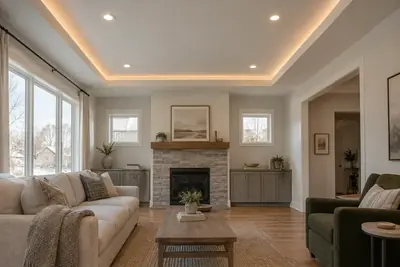
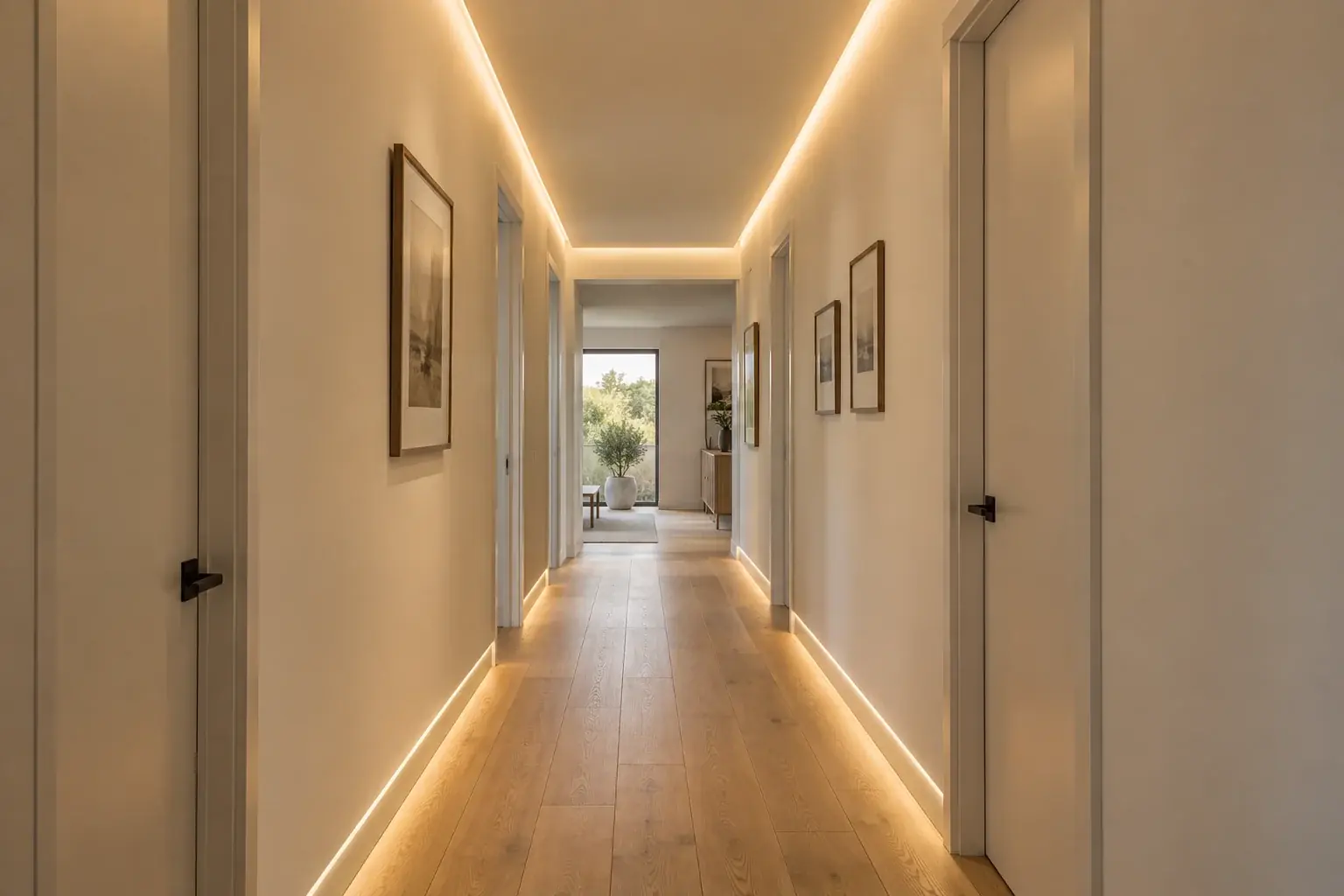
Cove lighting and recessed linear lighting both send light across the ceiling at a low angle. That is what makes them beautiful, and it is also what makes every ridge, tool mark and sanding scratch visible. A cove above a level-four ceiling that looked fine under a central fixture will show its joints the first evening the strip is turned on.
Before the ceiling is painted, look at it with a work light held against the surface at the angle the finished lighting will use. Fix what you see then; it is far cheaper than after paint.
Where new meets old.
A tray border, a soffit or a change of level gives the finish a natural place to change. Inside the border the new surface can be smooth while the old field keeps its texture, and the edge reads as intentional. Without a break, new smooth drywall has to be feathered into the old texture, and the blend is where most complaints start.
If the whole ceiling will be repainted anyway, the cleanest answer is often to skim and smooth the entire ceiling in that room. It costs more labour than patching, and it removes the question of matching altogether.
Put the finish in the scope.
The finish is the part of a ceiling project most often left vague, and it is the part you look at longest. Make sure the proposal names each of these.
- The finish level for the new drywall, in the words the trade uses
- Texture match, full skim, or a designed edge, and which surfaces each applies to
- Primer, paint, number of coats and sheen, and whether the whole ceiling is painted
- Who does the finishing and who does the painting if they are different trades
- Protection of floors and furniture, dust control and cleanup
A few more questions.
Should I remove popcorn texture before adding a tray?
Often the ceiling around new work is skimmed or re-textured anyway, so it is the natural moment to decide. Test older popcorn for asbestos before anyone disturbs it, and price removal as its own line.
What paint sheen suits a lit ceiling?
Flat or matte. Any sheen reflects the light source and highlights small flaws, especially under cove or linear light.
Is a smooth ceiling more work than a textured one?
Usually, because texture hides what a smooth finish has to fix. Under cove or linear light, smooth is generally the right call regardless.
The next step.
Explore cove lighting in the Iowa City area, or request an estimate with your room details.
These guides help you plan a conversation. They are not room-specific construction instructions or a substitute for an installer assessing your home. Images illustrate design ideas rather than completed Petra work.