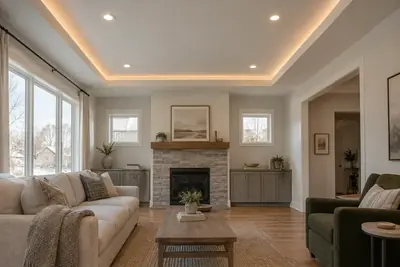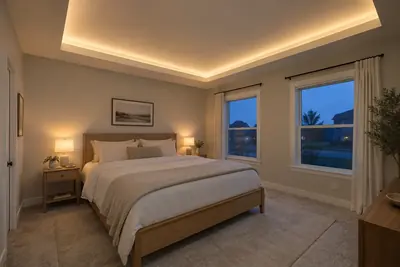
Judge every idea from the pillow.
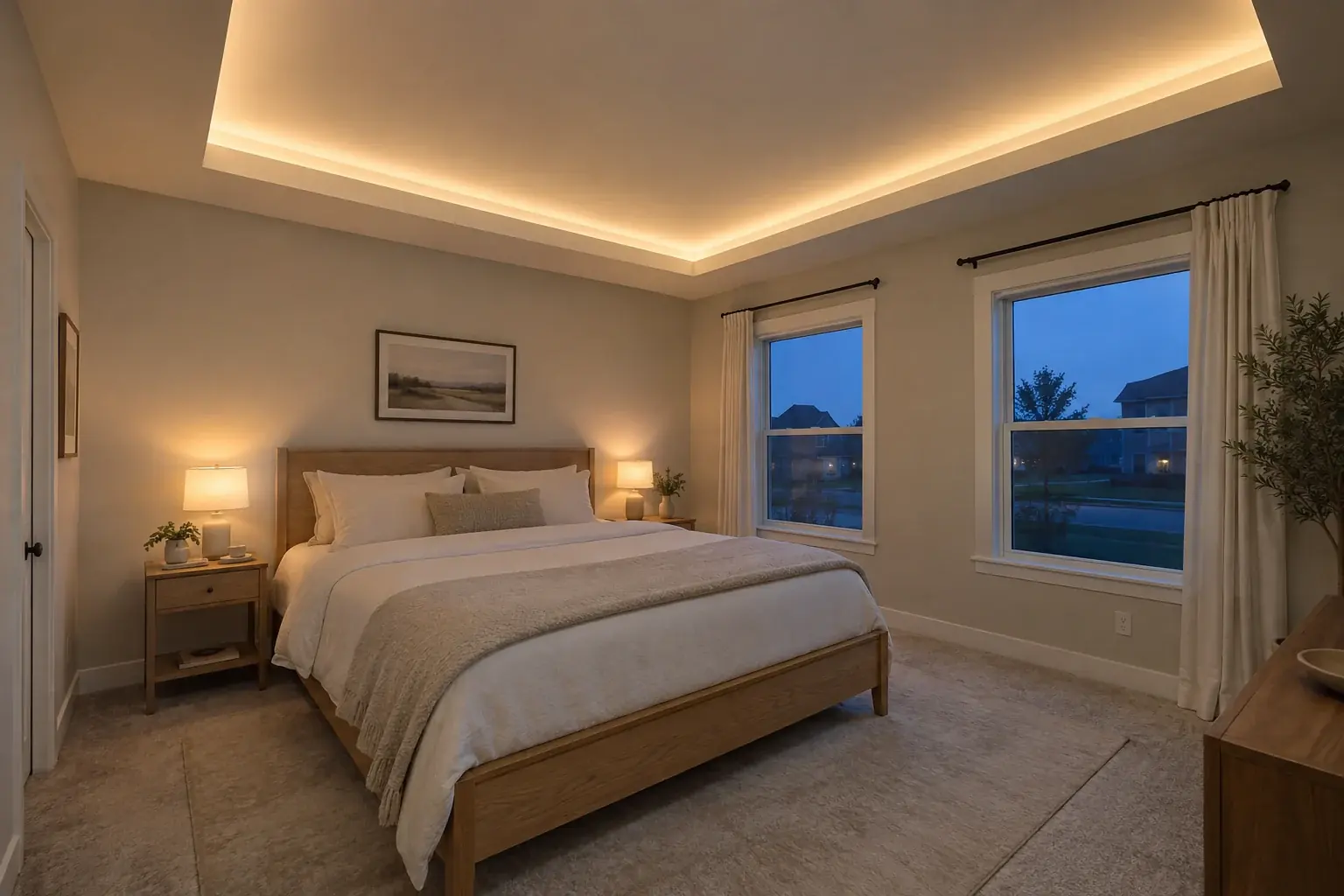
Lie on the bed and look up. That view, not the one from the door, is the one a bedroom ceiling design has to satisfy. A downlight directly over the bed is a glare source every night; a bright centre panel is a ceiling you cannot switch off in your mind. Indirect cove light hides the source behind a lip, so the ceiling glows without a point of light in your eyes.
Reading light belongs at the bedside, on the wall or a lamp, not in the ceiling. Keeping those separate lets the ceiling stay soft in the evening and off at night.
A shallow border, not a deep tray.
Bedrooms are often the smallest rooms with the lowest ceilings in the house, and a deep tray takes headroom exactly where it is most noticeable. A shallow perimeter border gives the room definition and somewhere to hide a light strip without the room feeling lower. In a primary bedroom with a nine-foot ceiling there is more room to play; in a standard bedroom, less is usually better.
Check the closet doors, window trim and any tall wardrobe against the finished height of the border before committing. The low ceiling design guide goes further on what a shallow detail can and cannot do.
Three light settings, one dimmer.
A bedroom needs a bright setting for making the bed and finding things, a soft setting for the evening, and something close to nothing for the middle of the night. A dimmable cove circuit covers the first two on its own. A separate, very low setting near the floor or the door handles the third without lighting the whole ceiling.
Warm colour temperatures suit bedrooms, and a good dimmer matters more than the exact number. Ask to see a sample of the actual strip in the room before the ceiling is closed, and put a control by the bed as well as by the door.
Keep the centre quiet.
Decide early whether a fan or a pendant stays in the middle of the ceiling. If it does, the border works around it and the lighting plan avoids its blades. If it goes, resist filling the centre with a new feature; the calm of a flat centre is the point.
Vents, smoke detectors and speakers still need to live somewhere. Mark them on the drawing so they land inside the plain area rather than interrupting the border.
Other bedrooms.
Guest rooms and children’s rooms rarely need a shaped ceiling at all. A warm dimmable perimeter light, or simply better bedside lighting, gives most of the benefit without construction. If a child’s room does get a detail, keep it simple enough to outlast the current taste in colours.
Where the budget allows one bedroom project, the primary bedroom is usually the one that repays it, because it is the room used every evening.
A few more questions.
Is cove lighting bright enough on its own in a bedroom?
Often enough for the evening, not for tasks. Pair it with bedside lamps or wall lights for reading and ask to see a sample of the strip in the room.
Does a tray ceiling make a bedroom feel smaller?
A deep or multi-level tray can. A shallow border usually does not, provided the centre keeps its original height. Confirm the finished heights on a drawing first.
What colour temperature should bedroom LED lighting be?
Warm is the usual choice for a bedroom. Dimming and placement matter more than the exact number, so judge it from a sample in the room rather than a specification sheet.
The next step.
Explore cove lighting in the Iowa City area, or request an estimate with your room details.
These guides help you plan a conversation. They are not room-specific construction instructions or a substitute for an installer assessing your home. Images illustrate design ideas rather than completed Petra work.